
Why does CAPIT have students spell phrases that aren't complete sentences?
We're not asking anyone to change their classroom standards for complete sentences. Here's our pedagogical reasoning.
Cognitive overload. In the early levels, CAPIT's primary goal is to build decoding and encoding fluency. Phrases like "nut in net" are intentionally designed to isolate specific spelling patterns so students can focus entirely on the phonics skill being practiced, without the added cognitive load of grammar, syntax, and meaning—all at once.
The constraint of decodability. When text is limited to only the sounds and spelling patterns a student has learned so far, constructing grammatically complete sentences is often impossible. A complete version — "The nut is in the net" — would require students to know the digraph /th/, the schwa sound /ə/, and the spelling alternative /z/ for the letter 's'. These are skills they haven't learned yet. Insisting on complete sentences would mean either introducing code that students aren't ready for or severely limiting their practice opportunities.
Learning to Read vs. Reading to Learn. CAPIT Levels 1, 2, and 3 focus on learning to read—mastering the foundational code that unlocks all future learning. Levels 4 and 5 transition students into reading to learn, where they apply their automated decoding skills to access content and develop vocabulary, fluency, and comprehension. During the learning-to-read stage, the priority is to isolate and automate foundational skills. This sometimes means practicing in contexts that don't yet reflect the full complexity of mature writing, including sentence fragments. As students' knowledge increases through the levels, the text naturally becomes more grammatically complete and sophisticated.
No pedagogical harm. Children learn what constitutes a proper sentence through explicit grammar instruction in the classroom and through exposure to rich, complete language throughout their day. There is no evidence that practicing phonics with fragments interferes with their developing understanding of sentence structure. These are separate skills that develop simultaneously.
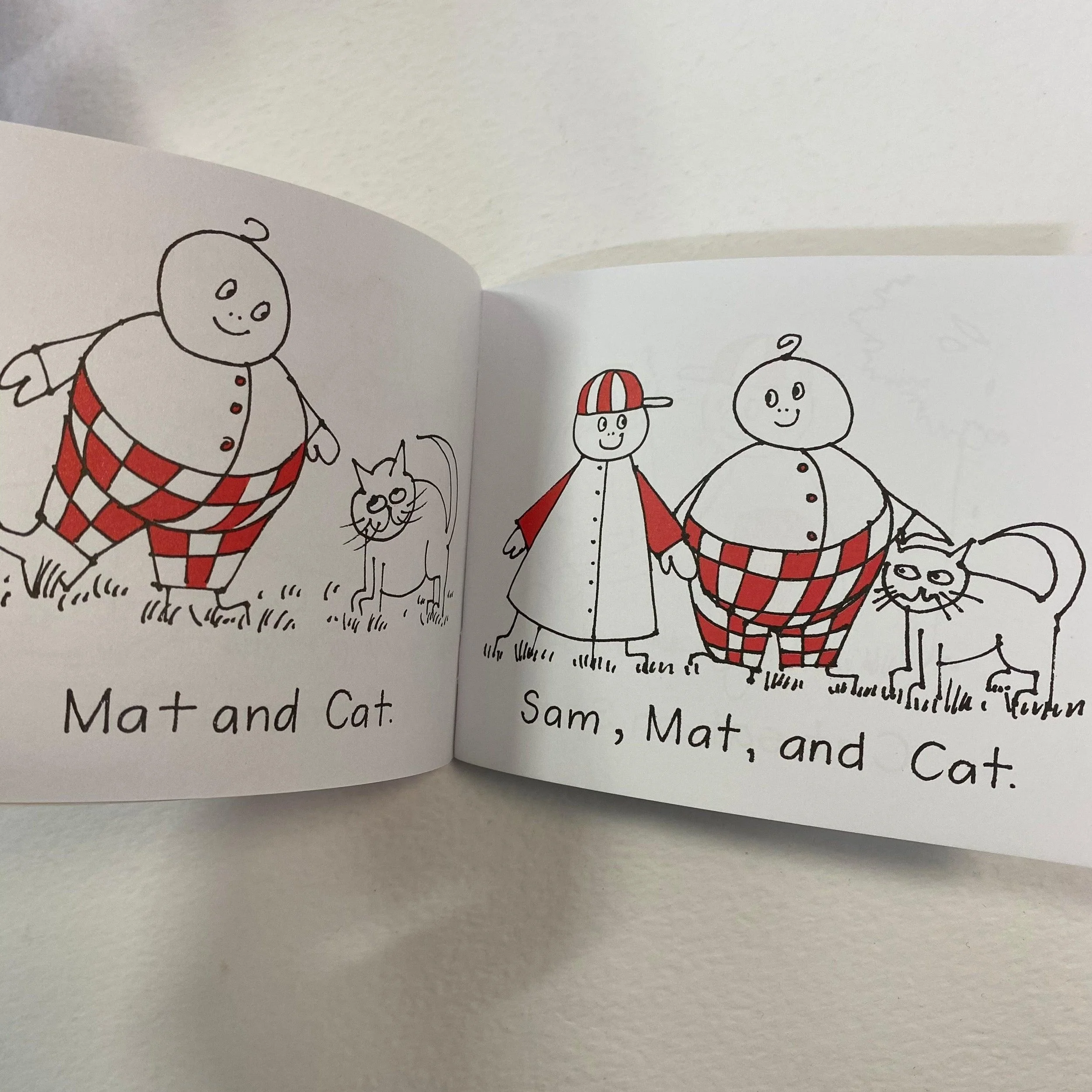
It's also worth noting that sentence fragments are standard practice in early decodable texts—including well-established programs like Bob Books, which use constructions like "Mat and Cat" for the same reason. And fragments are ubiquitous in everyday language: children and adults speak in fragments naturally ("Big dog!" "Sleep tight." "Just do it."), and fragments appear throughout literature for stylistic effect.
The key is that students are getting both: rigorous phonics practice through CAPIT—which sometimes uses fragments for instructional purposes—AND proper sentence instruction in the classroom. Together, they provide the complete picture.